Independent from remediation
Our testers collect samples; they don't sell the fix.
Last updated: October 4, 2026
Ensure your indoor environment is safe and healthy.You can't see the spores floating in your indoor air — but a spore trap can catch them. We sample the air inside your Newark home, compare it against the air outside on the same day, and send every sample to an independent lab that identifies what's really there.
Our testers collect samples; they don't sell the fix.
Every visit pairs indoor samples with an outdoor control.
Each sample is labeled, sealed, and tracked to the lab.
Lab findings explained clearly, with practical next steps.
Every testing visit is built around comparison: what's in your indoor air versus what's in the outdoor air on the same day. That baseline is what turns a spore count into an answer.
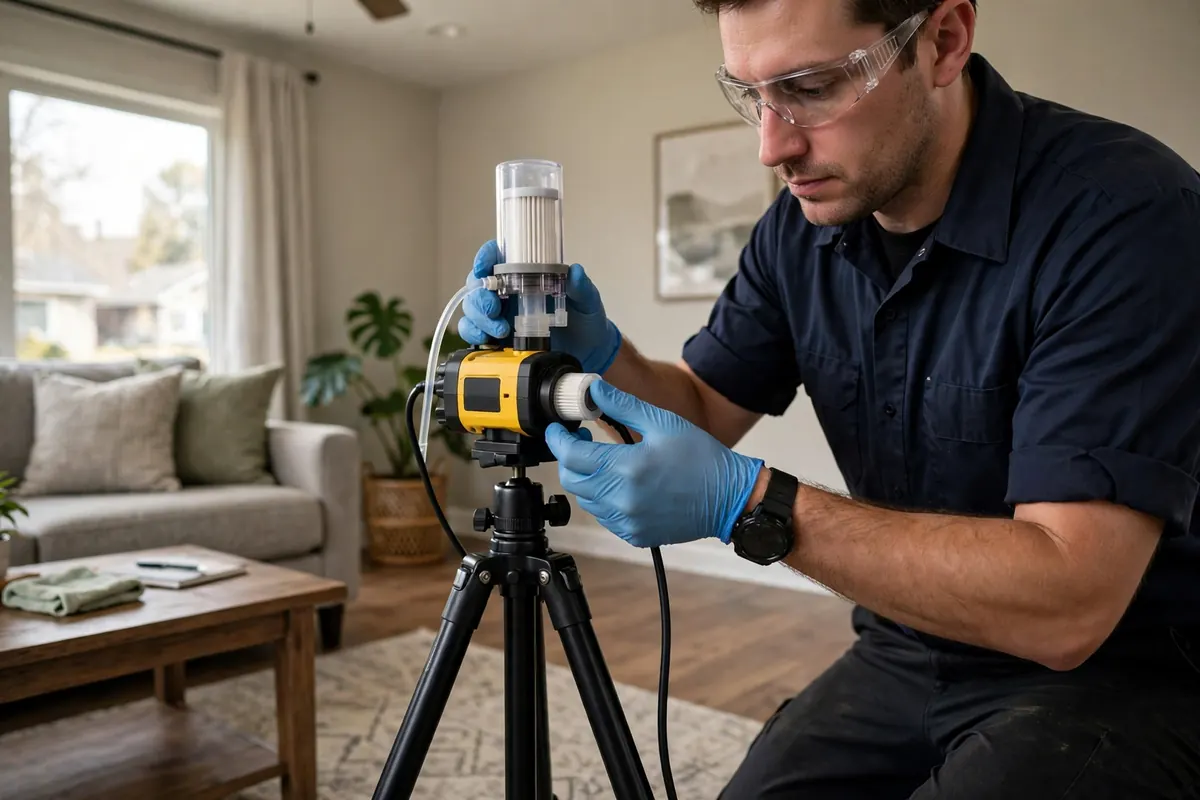
A calibrated pump draws a measured volume of air through cassettes placed in living areas, bedrooms, and any rooms of concern.
A control sample taken outside your home the same day, so the lab can separate normal background spores from a genuine indoor source.
Settled dust collected from floors and surfaces for DNA-based analysis that reveals mold history a single air sample can miss.
The laboratory's written findings plus a plain-English review of what the numbers mean and what to do next.
Tell us what you're smelling or seeing and get a clear next step from the local team.
A visual inspection can only find mold you can already see. Air quality testing is for everything else: spores drifting through rooms with no visible growth, contamination tucked inside wall cavities, and the lingering question after a leak has been dried out.
Testing doesn't replace a good inspection — it answers different questions. An inspection finds moisture and visible growth; a spore-trap sample measures what's actually floating in the air you breathe, and an outdoor baseline shows whether indoor levels are unusual for that day in Newark. When the two disagree, the lab results tell you which problem to solve first.
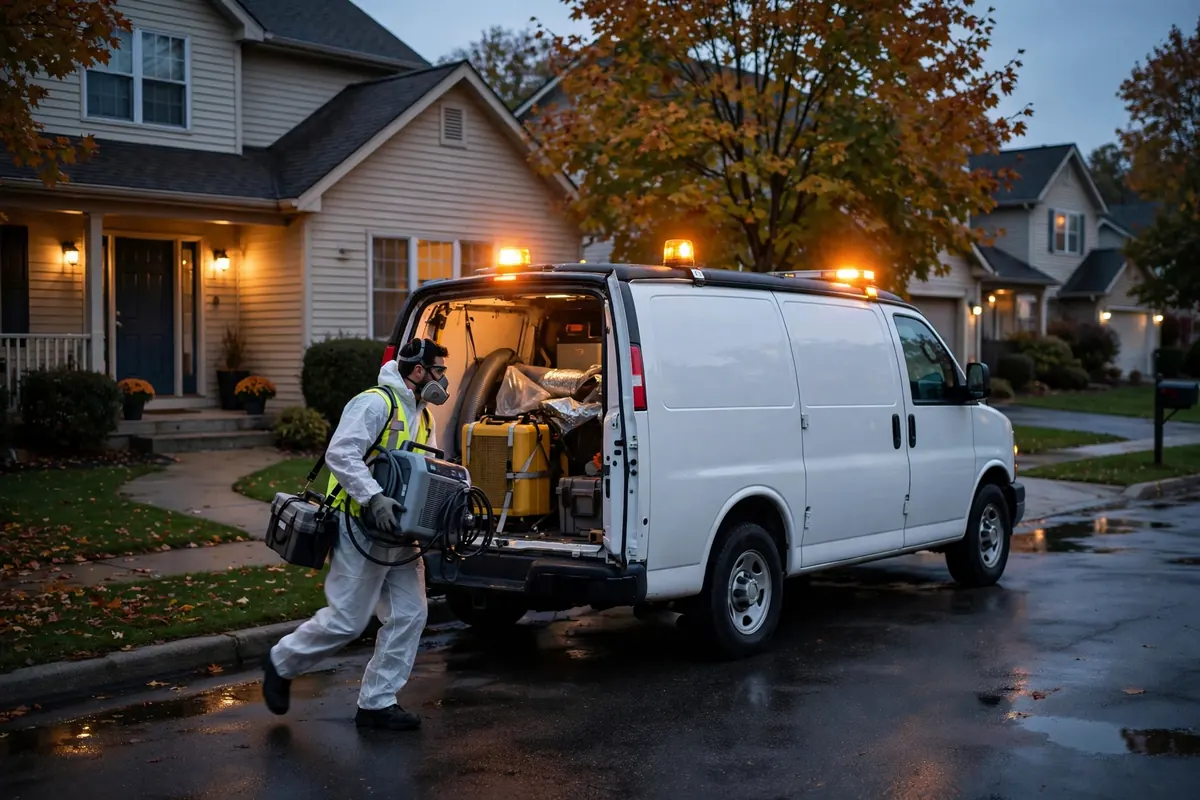
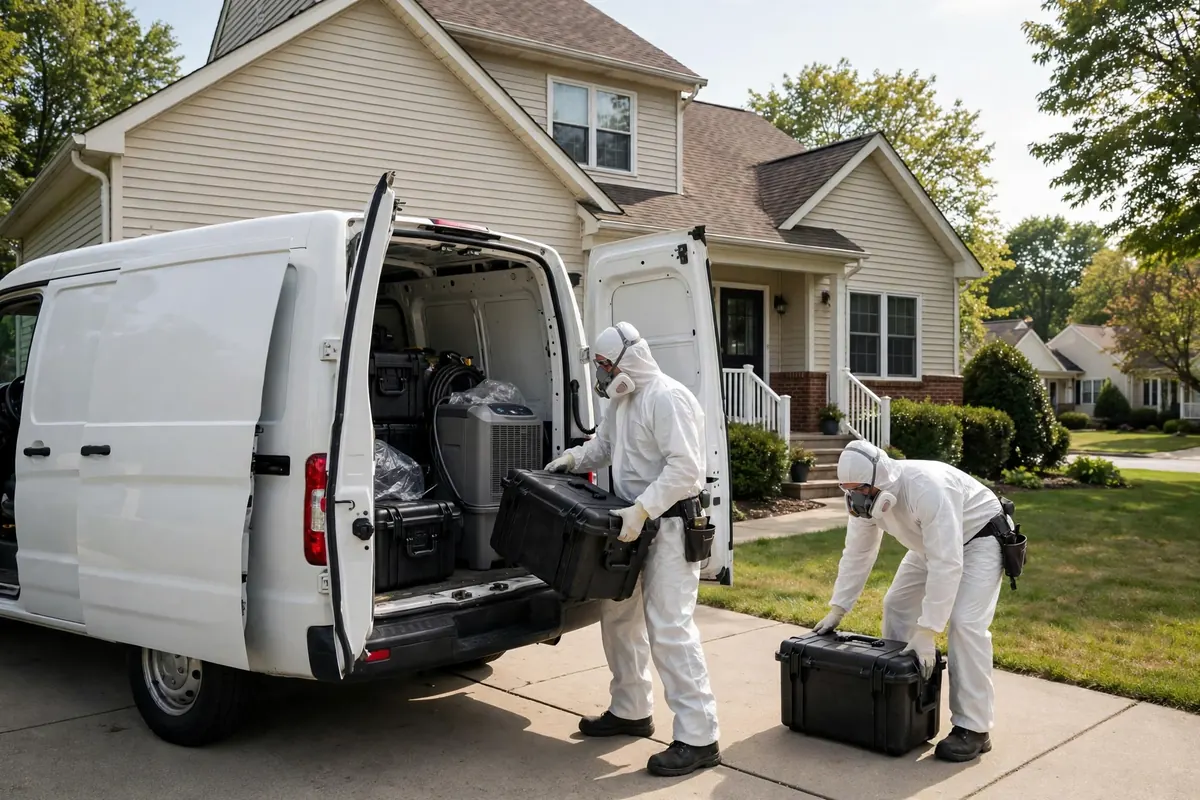
We tour the home, note complaint areas, moisture history, and the HVAC layout, then agree on where indoor samples go and where the outdoor control is taken.
A calibrated pump draws a measured volume of air through each cassette — usually a few minutes per sample — while the home stays in normal condition: windows closed, HVAC running as usual.
Where longer-term history matters, we vacuum settled dust from representative surfaces into a sealed cartridge for DNA-based laboratory analysis.
Every cassette and cartridge is labeled with its location, time, and conditions, sealed, and sent to the independent lab the same day it's collected.
When the lab report arrives, we walk you through it: which spore types were found, how indoor counts compare to the outdoor baseline, and what — if anything — deserves action.
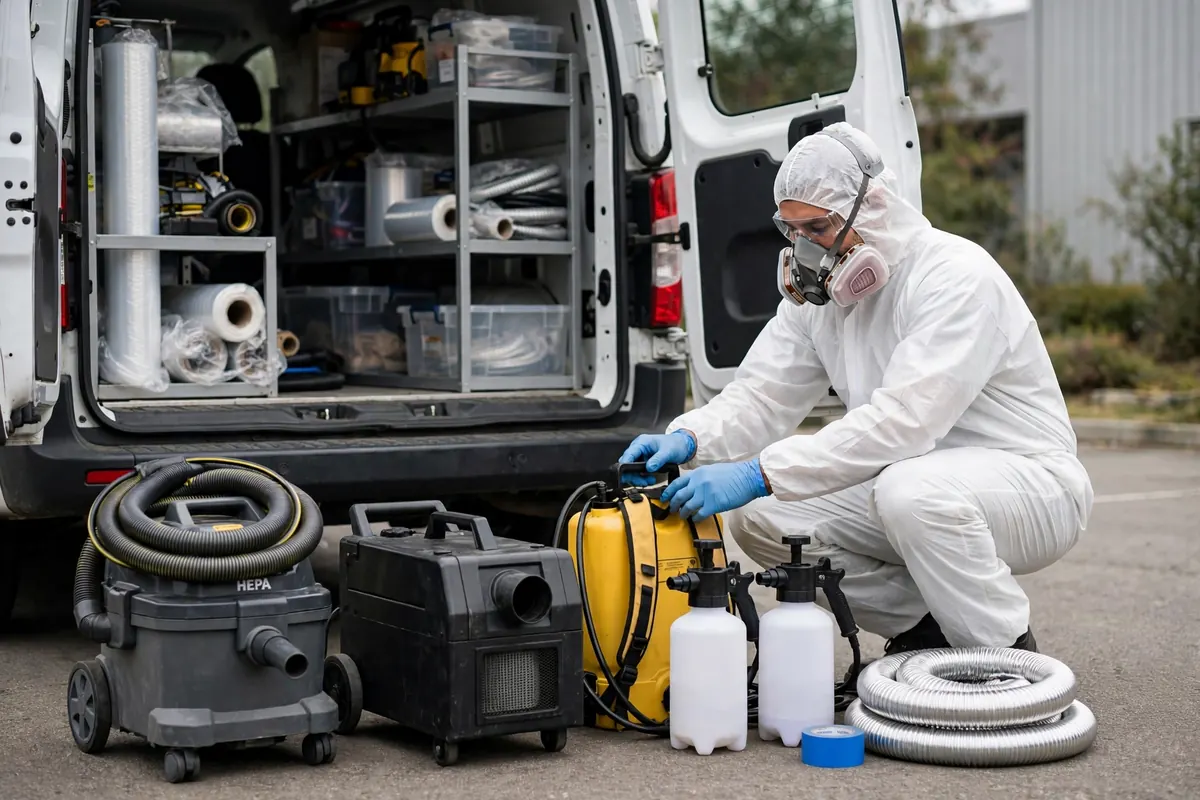
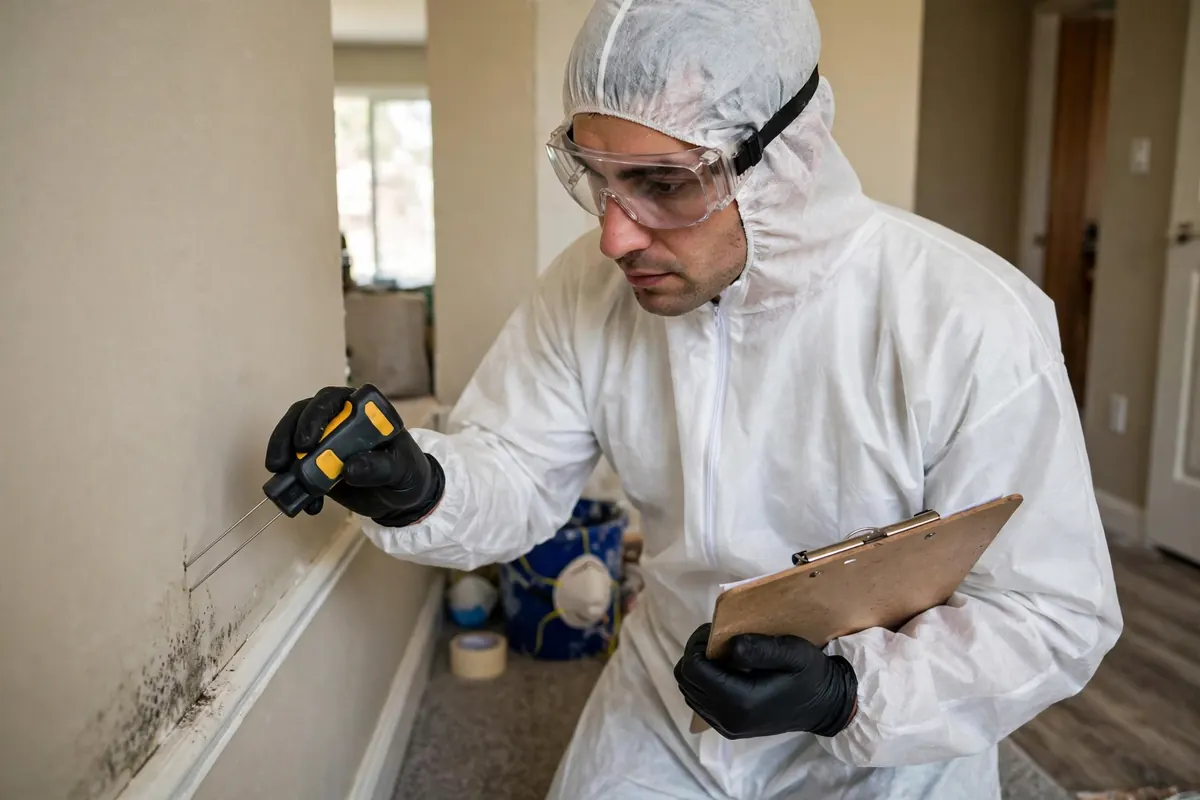
Single-use cassettes that trap airborne particles on an adhesive slide for microscopic counting and identification.
Draws a precise, known volume of air through each cassette, so spore counts can be compared room to room and day to day.
The same spore-trap method, run outside your home — the reference point every indoor reading is judged against.
Collects settled dust for DNA-based mold analysis, showing which species have accumulated over months, not just what's airborne today.
An independent lab counts and identifies spores under the microscope — no on-site guessing, no instant-read gadgets.
Every sample is labeled with its location, time, and conditions, and tracked from your home to the lab bench.
One air sample can't see inside a wall cavity or certify a home mold-free. When a different test would answer your question better, we'll tell you.
Surfaces can look fine while spores linger in the air. A post-drying sample checks whether the cleanup actually cleared the air, not just the surfaces.
When you can smell a problem but can't find it, indoor and outdoor sampling shows whether the air itself carries an unusual spore load — and in which rooms.
A pre-work sample documents the starting point; a clearance retest confirms levels are back near outdoor background before reconstruction begins.
One honest exception: if mold is clearly visible across a wall or ceiling, testing rarely changes the plan — remediation is the answer either way. In that case we'll tell you to save the lab fee and put it toward the fix.
Newark's housing stock leaves fingerprints on every air sample: humid summers, older multifamily buildings, and plenty of below-grade living space. Knowing the local patterns is what lets us read a lab report in context instead of in a vacuum.
Dense blocks of older multifamily buildings near the Passaic River, where basement moisture and aging plumbing keep indoor humidity high.
Large early-1900s homes with finished basements and old attics — plenty of hidden cavities where a slow leak can feed mold unseen.
Humid summers and older housing stock mean condensation and poor ventilation show up quickly in air samples.
Garden-level and basement apartments are common across Newark; below-grade rooms run damper and test higher without steady dehumidification.
Window air conditioners and aging ductwork can recirculate spores. We sample with systems running as usual, so results reflect real conditions.
A musty odor hangs in a finished basement, but no mold is visible anywhere.
Indoor spore counts run well above the outdoor baseline in one room only, narrowing the inspection to a wall cavity behind the laundry area.
Maintenance: A follow-up sample after the repair confirms the source is gone.
Remediation is finished, and the homeowner wants proof the air is back to normal before rebuilding.
Post-work samples line up with the outdoor background, and the written report documents the result for the project file.
Maintenance: Keep the report with your home records — it answers the question if a buyer ever asks.
A buyer loves an older Newark home, but the basement smells damp and the disclosure says little.
Testing shows whether indoor spore levels are ordinary or unusual for that day — information the buyer can act on before closing.
Maintenance: If the purchase goes through, the baseline report makes any future comparison straightforward.
Testing doesn't fix mold — it makes the invisible measurable, so every decision after it rests on data instead of guesswork.
Rooms can test high while walls look clean. Sampling narrows the search to the rooms that actually need investigation, instead of opening walls at random.
The drying equipment leaves and everything looks dry — but did the air clear too? A post-drying sample replaces assumptions with a laboratory report.
Buyers, sellers, landlords, and contractors argue about mold with nothing on paper. An indoor-outdoor comparison gives everyone the same numbers to work from.
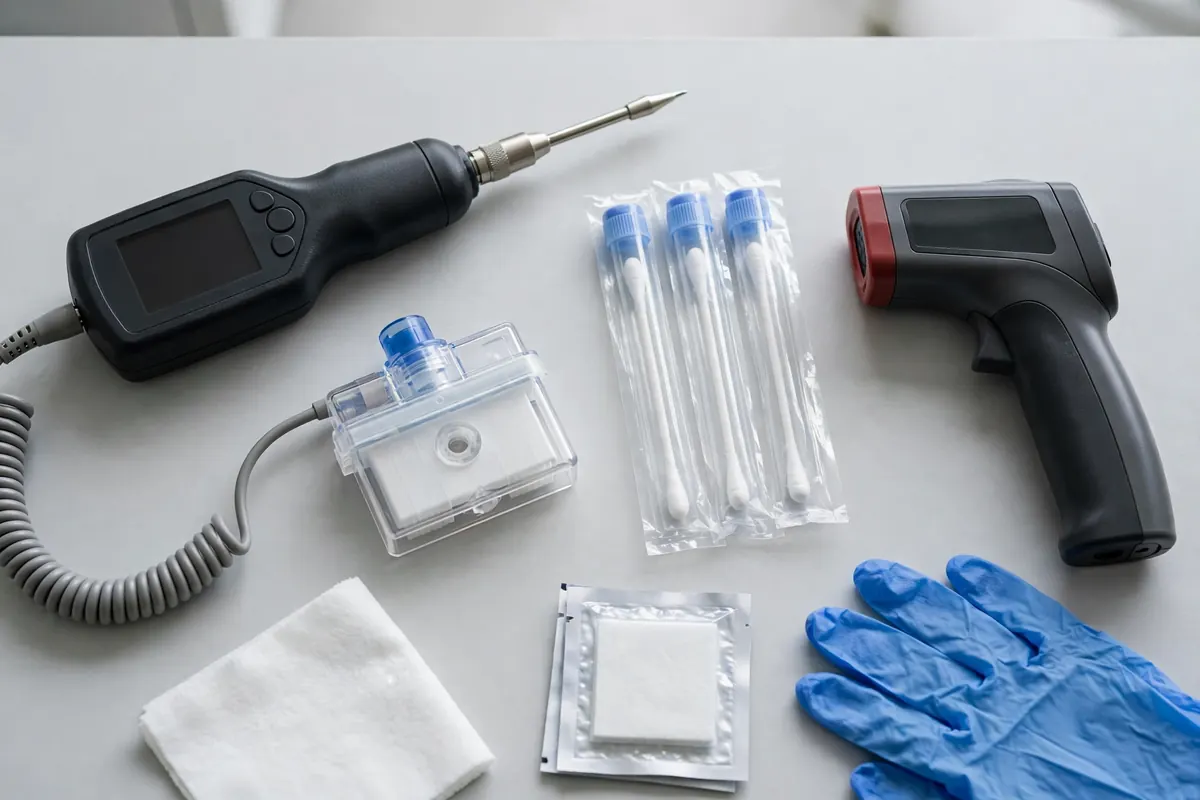
Air samples are only as good as the hands that collect them. Our technicians are trained in the sampling method itself — pump calibration, cassette handling, ERMI collection — and in recognizing when a sample won't answer your question.
Technicians use specialized equipment to collect air samples, which are then analyzed in a laboratory for mold spore concentration and types.
High levels can be caused by water damage, poor ventilation, and humidity issues. These conditions create an ideal environment for mold growth.
Invisible mold spores can still be present in the air, affecting air quality. Air quality testing for mold Newark helps identify these hidden issues.
Outdoor samples provide a baseline for comparison. Indoor samples help identify specific pollutants and mold levels within your home.
Not seeing your question? Our local team can help you understand urgency, scheduling and what to expect.
Ask the local team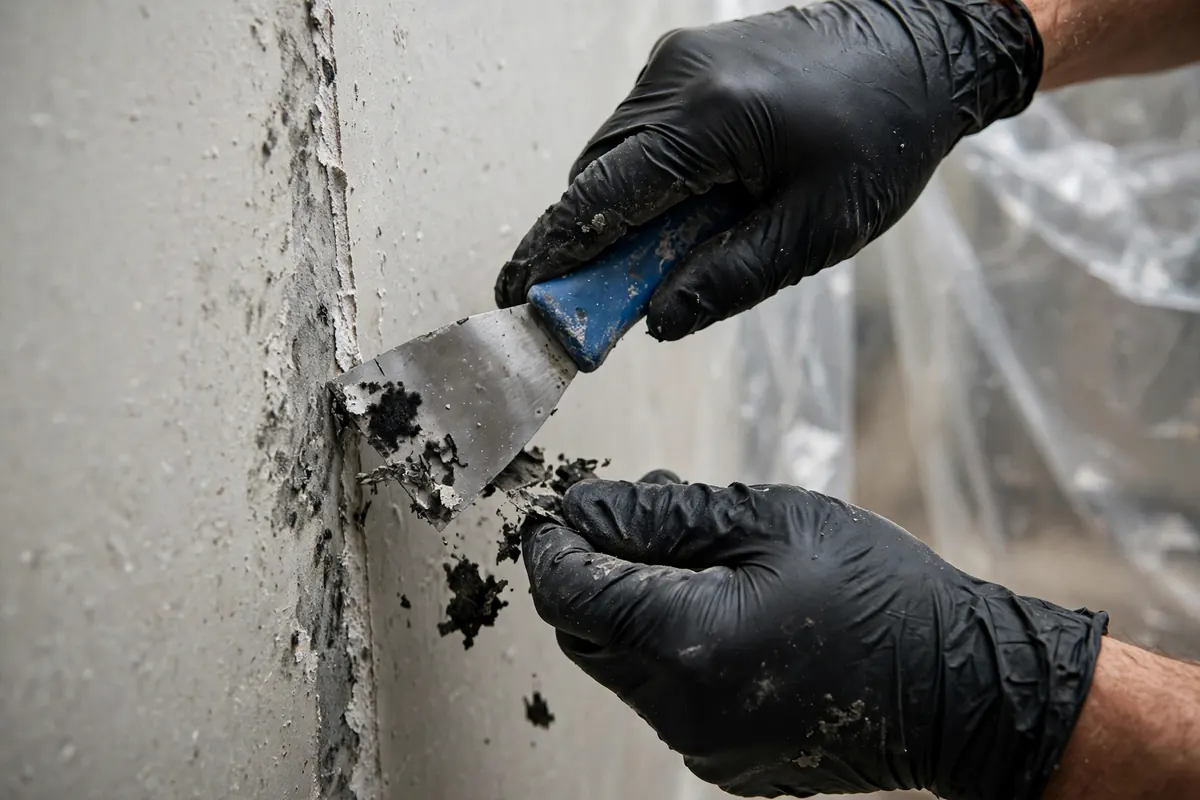
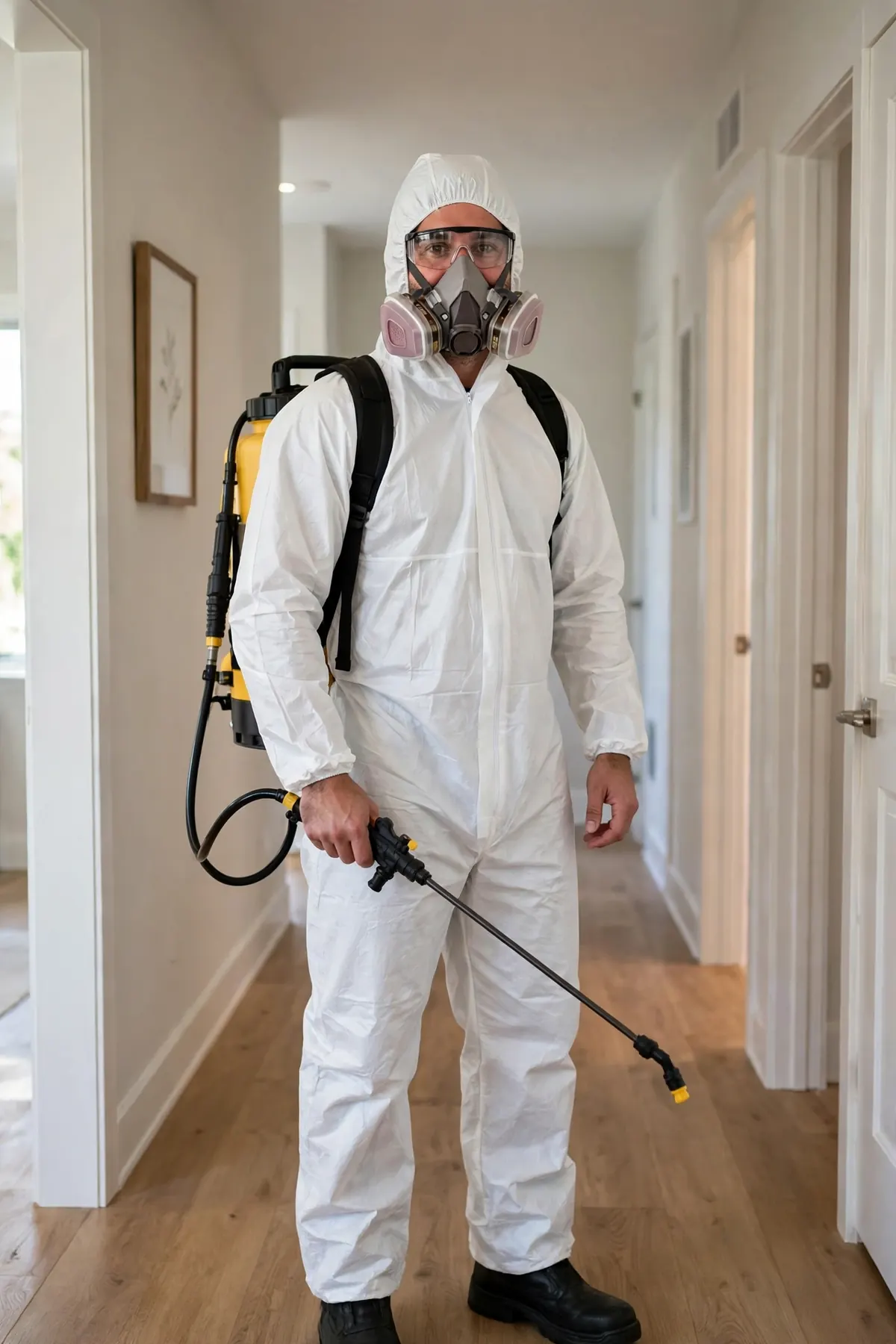
This service is essential for eliminating hazardous mold types that can affect air quality. We ensure thorough removal and prevention.
View service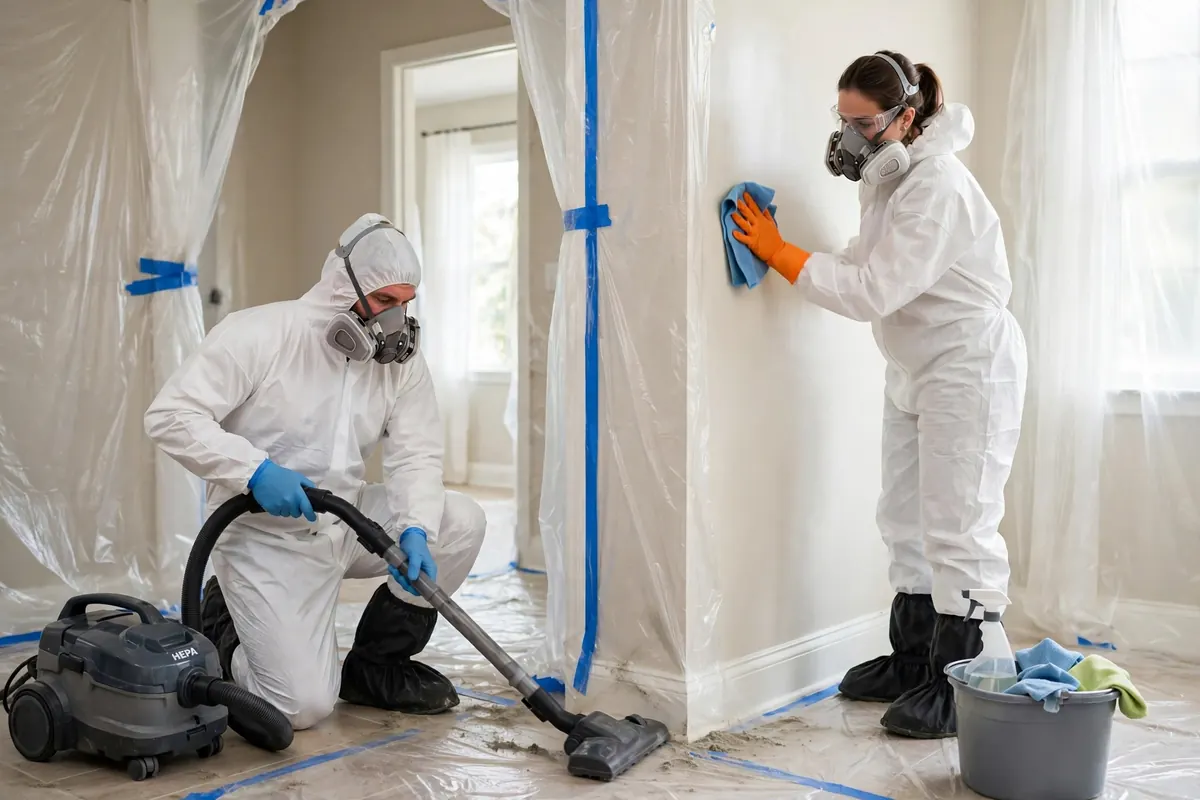
Our mold inspection services assess your property for mold presence, providing insights that complement air quality testing.
View service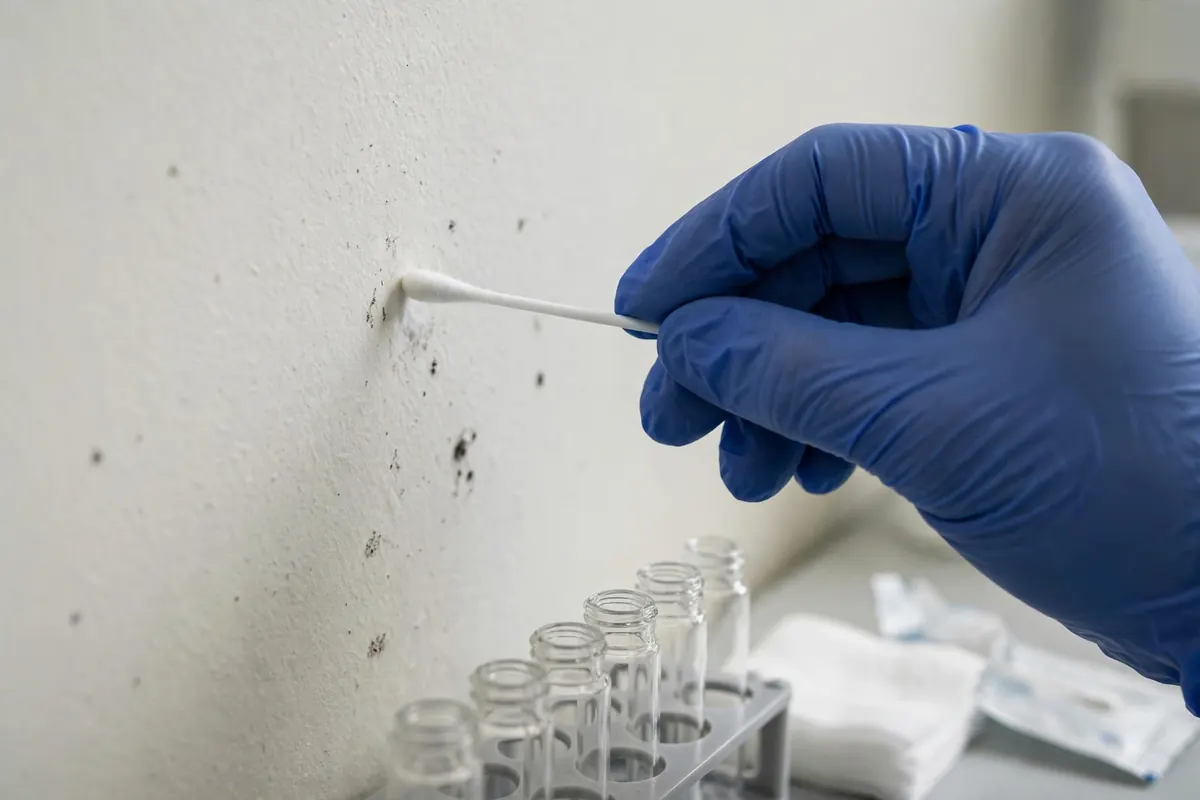
After remediation, we perform clearance testing to confirm that mold levels are safe, ensuring your space is healthy.
View service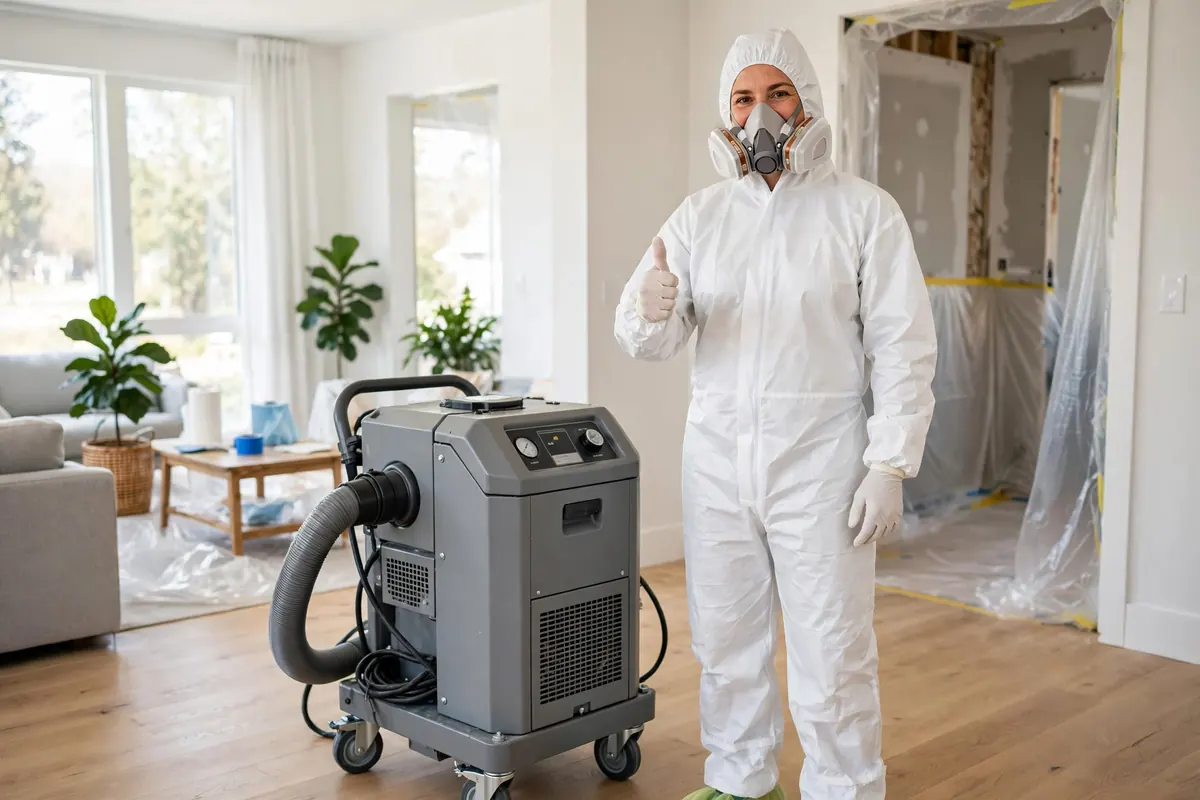
Basements are prone to mold due to moisture. Our services ensure a clean, dry, and safe environment.
View serviceWe bring this service to homes and businesses across Newark and the surrounding communities.
Wondering about a musty room, a past leak, or what a lab report would actually tell you? Call (973) 400-5618 or send us a note — we'll help you decide whether testing makes sense before you spend anything on it.
Small spots turn into big jobs fast in New Jersey humidity. Call now and we'll schedule your inspection.
Call (973) 400-5618