No secondary waste
Pellets sublimate on impact — nothing to haul away but the mold.
Last updated: October 4, 2026
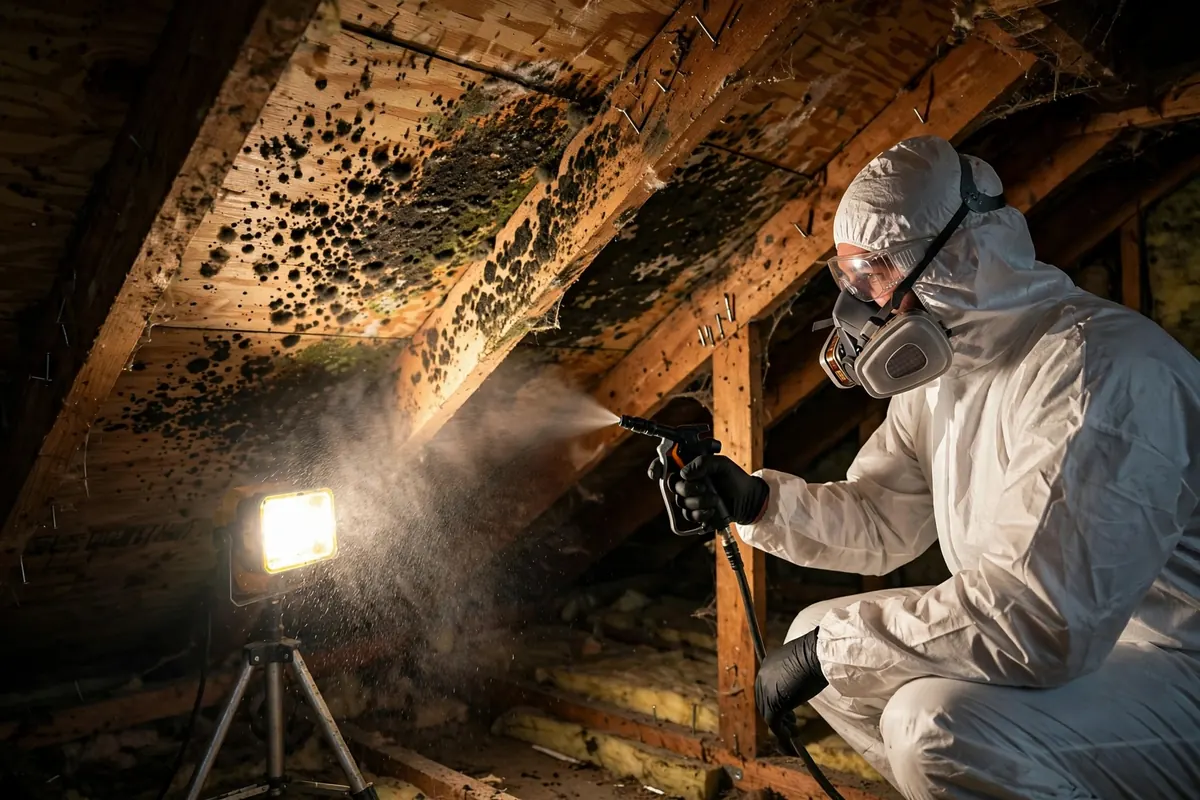
Mold removal without the messDry ice blasting strips mold from wood framing with frozen CO2 pellets that vanish on impact — no water, no chemicals, no secondary waste. It's the fastest way to clean attics, joists, and subfloor back to bare wood.
Pellets sublimate on impact — nothing to haul away but the mold.
Calibrated pressure cleans framing without chewing it up.
Blasting shines where hand-scrubbing can't reach.
We'll tell you when blasting isn't the right tool for the job.
Blasting is one step in a proper job — inspection, containment, and verification matter just as much as the pellets.
We confirm the surfaces and the space are right for blasting before quoting it.
The work zone gets sealed and ventilated — blasting kicks up a lot of particulate.
Calibrated pellet blasting strips mold from wood and masonry back to clean substrate.
Dislodged debris gets HEPA-vacuumed; then we verify the surfaces are clean.
Send photos or book a look — we'll tell you straight whether blasting is the right method.
A blasting rig accelerates rice-sized dry ice pellets — solid CO2 at around -109°F — at the moldy surface. On impact, two things happen: the kinetic hit knocks contamination loose, and the pellet instantly sublimates into gas, expanding nearly 800 times and lifting residue out of the wood grain. The CO2 simply dissipates into the air. No water, no chemicals, no blasting media to sweep up afterward.
That's why blasting dominates attic and framing work: it cleans rafters, joists, and sheathing in hours where hand-scrubbing would take days, and it reaches into grain and crevices that wire brushes miss. It's not right for everything — drywall and painted surfaces are usually better handled manually — but on bare wood it's unmatched.
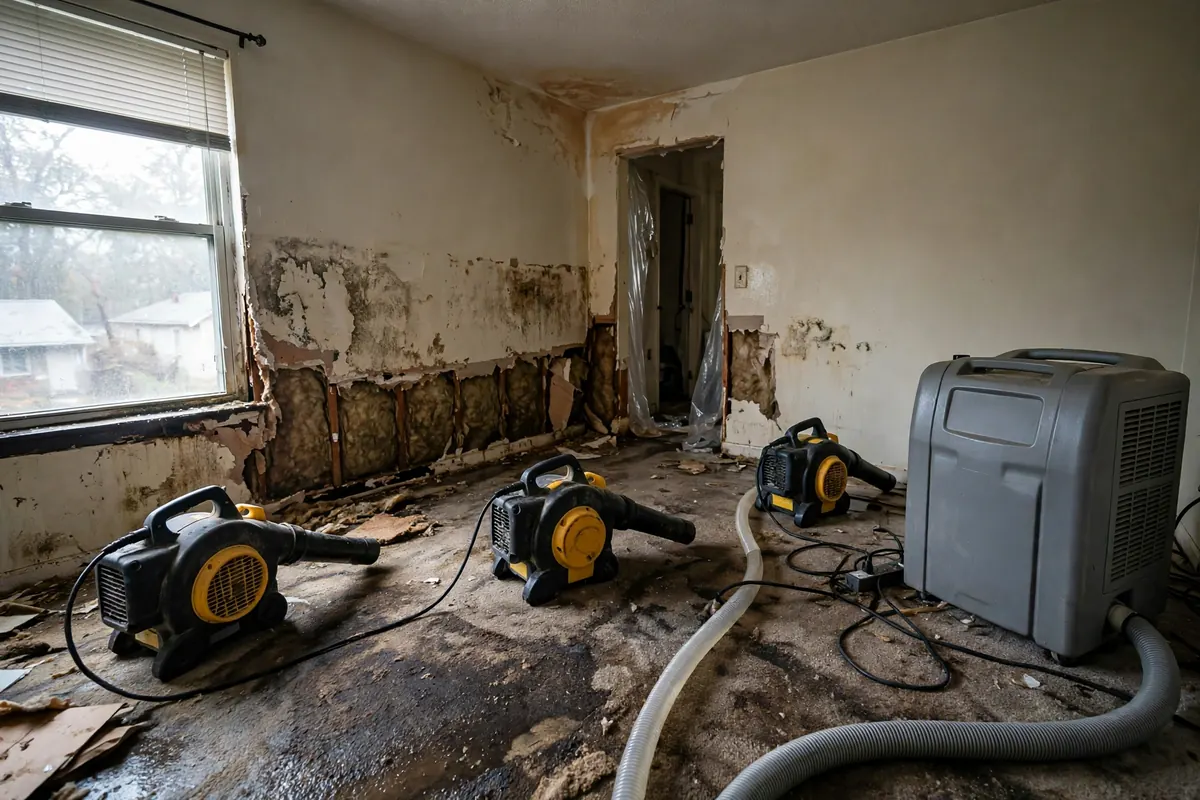
We verify the surfaces are bare wood or masonry and the space can be properly contained and ventilated.
Poly barriers go up and ventilation is established — blasting kicks up dense particulate.
Technicians work methodically across the framing, calibrating pressure to clean without damaging wood.
All dislodged debris gets HEPA-vacuumed — the only waste the process produces.
Surfaces inspected clean; antimicrobial treatment applied where appropriate, then moisture fixes discussed.
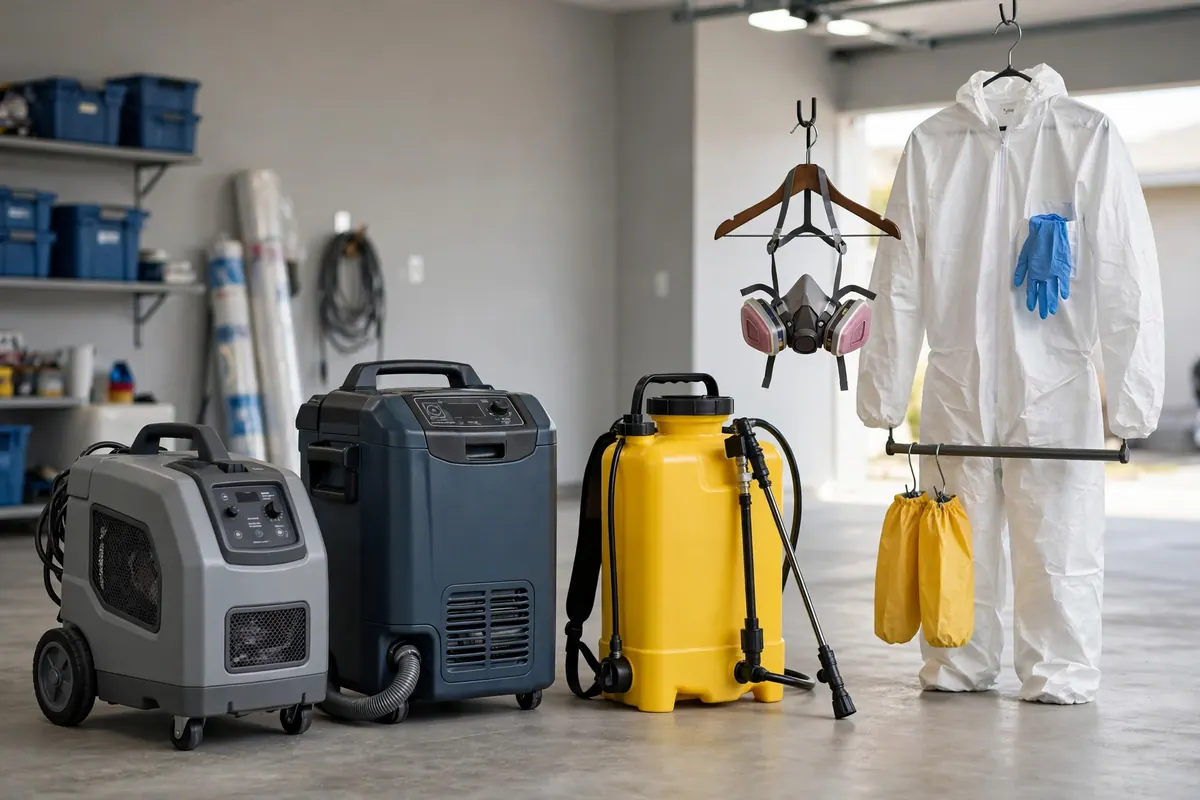
Precision rig that feeds and accelerates pellets at controlled pressure and flow.
Rice-sized solid CO2 — the blasting medium that sublimates into harmless gas.
Manages CO2 buildup and clears airborne particulate during blasting.
Final cleanup of all dislodged debris — the only waste this method creates.
We adhere to standards for mold remediation, ensuring our methods are effective and safe.
Sealed barriers and negative air, because blasting is the messiest clean method there's.
Confirm the framing is dry before and after — blasting cleans mold, not moisture.
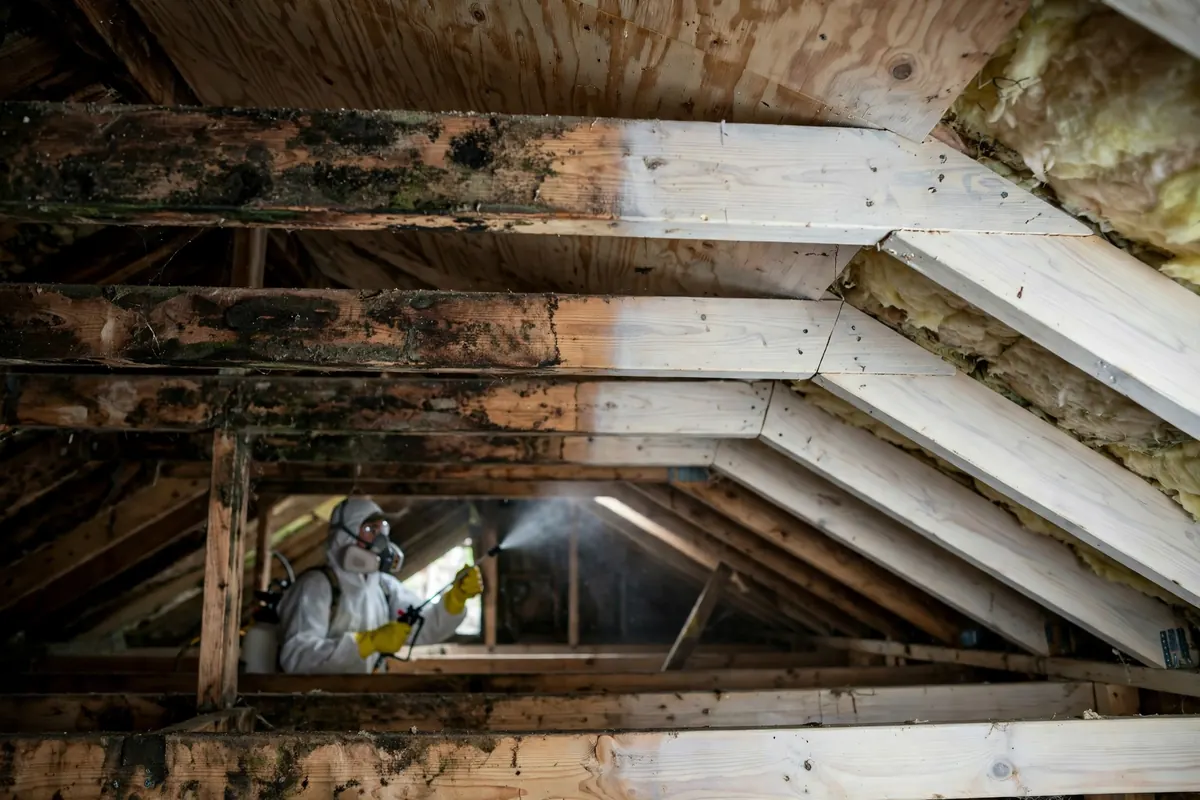
The classic blasting job — large bare-wood surfaces cleaned in hours instead of days.
Joists and subfloor with surface mold across big areas, where hand-scrubbing is impractical.
Painted drywall, small isolated patches, or spaces that can't be ventilated — manual removal is cheaper and safer there. We'll say so.
Newark's older housing stock means a lot of bare-wood attics and unfinished basements — exactly where blasting earns its keep. Pre-war homes with original roof sheathing, post-war capes with moldy attic decking from bathroom vents, and basement framing exposed by old stone foundations are our most common blasting jobs. Big wood surfaces, poor access for hand tools, and a need for speed: that's the blasting trifecta.
Pre-war plank sheathing with decades of slow roof-leak mold — blasting cleans it board by board.
Vents dumped into the attic for years leave decking moldy across the whole slope.
Unfinished basements with moldy joists clean up fast with no demolition needed.
After drying, blasting strips residual mold from studs and joists before rebuild.
Where preserving original framing matters, calibrated blasting cleans without replacement.
Roof sheathing blackened across the slope from years of a bathroom vent discharging into the attic.
Blasted back to clean wood in a day; vent rerouted through the roof so it can't happen again.
Maintenance: Keep bath and kitchen exhaust vented outdoors, and check the attic after major storms.
Surface mold across joists and subfloor after a foundation seep kept the basement damp for months.
Framing blasted clean with zero demolition; seepage addressed so the wood stays dry.
Maintenance: Maintain exterior grading and gutters — blasting cleans mold, not the water source.
Studs and plates moldy after floodwater receded and the space was dried.
Blasting stripped the framing clean, ready for rebuild without replacing sound wood.
Maintenance: Verify the space is fully dry with moisture readings before closing walls back up.
Blasting isn't the answer to every mold problem — but for these, nothing beats it.
Attics and framing with mold across hundreds of square feet — hand-scrubbing would take days and miss the grain.
Surface wiping leaves roots behind in porous wood. The sublimation blast lifts contamination out of the pores.
Post-flood rebuilds and real-estate deadlines need framing cleaned fast, with no drying wait afterward.
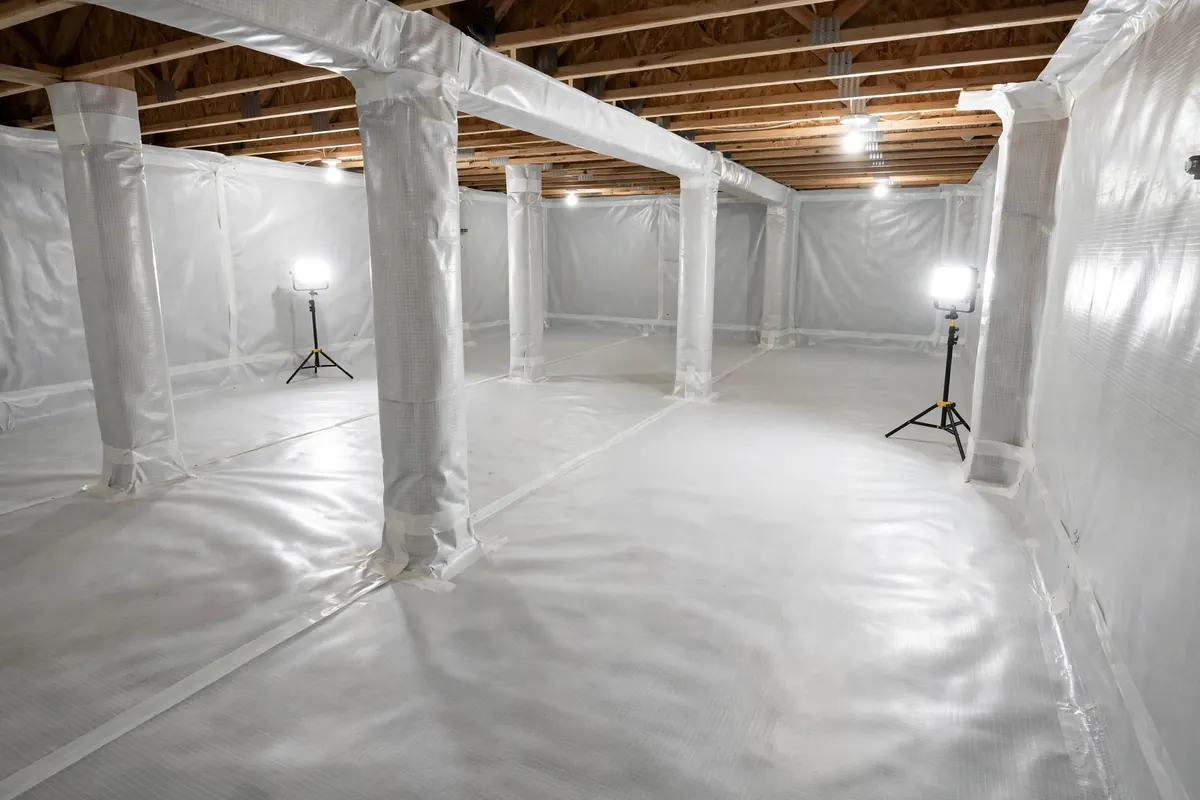
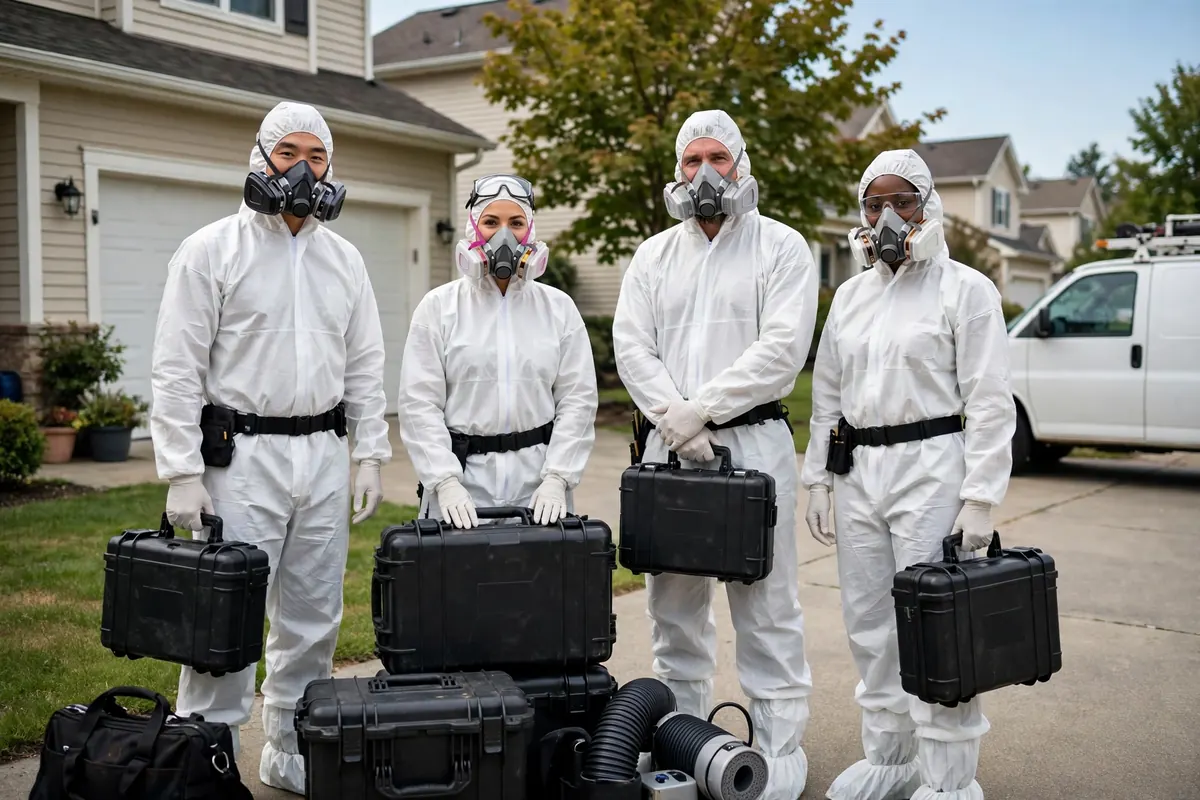
Dry ice blasting looks simple — point and shoot. The expertise is in the calibration: pressure, pellet flow, nozzle distance, and dwell time, all matched to the wood species and condition. Too aggressive and you etch the framing; too gentle and the mold stays.
Dry Ice Blasting Mold Removal Newark NJ is a technique that uses dry ice pellets to eliminate mold from surfaces without damaging them, providing an effective solution for mold issues.
Typically, the cost for Dry Ice Blasting Mold Removal Newark NJ ranges from $300 to $1,000, depending on the extent of the mold damage and the size of the area affected.
Most Dry Ice Blasting Mold Removal jobs in Newark can be completed within 2 to 4 hours, depending on the severity of the mold infestation and the size of the area.
You should call for Dry Ice Blasting Remediation Newark NJ when you notice signs of mold growth, such as a musty odor, visible mold, or water damage in your property.
Not seeing your question? Our local team can help you understand urgency, scheduling and what to expect.
Ask the local team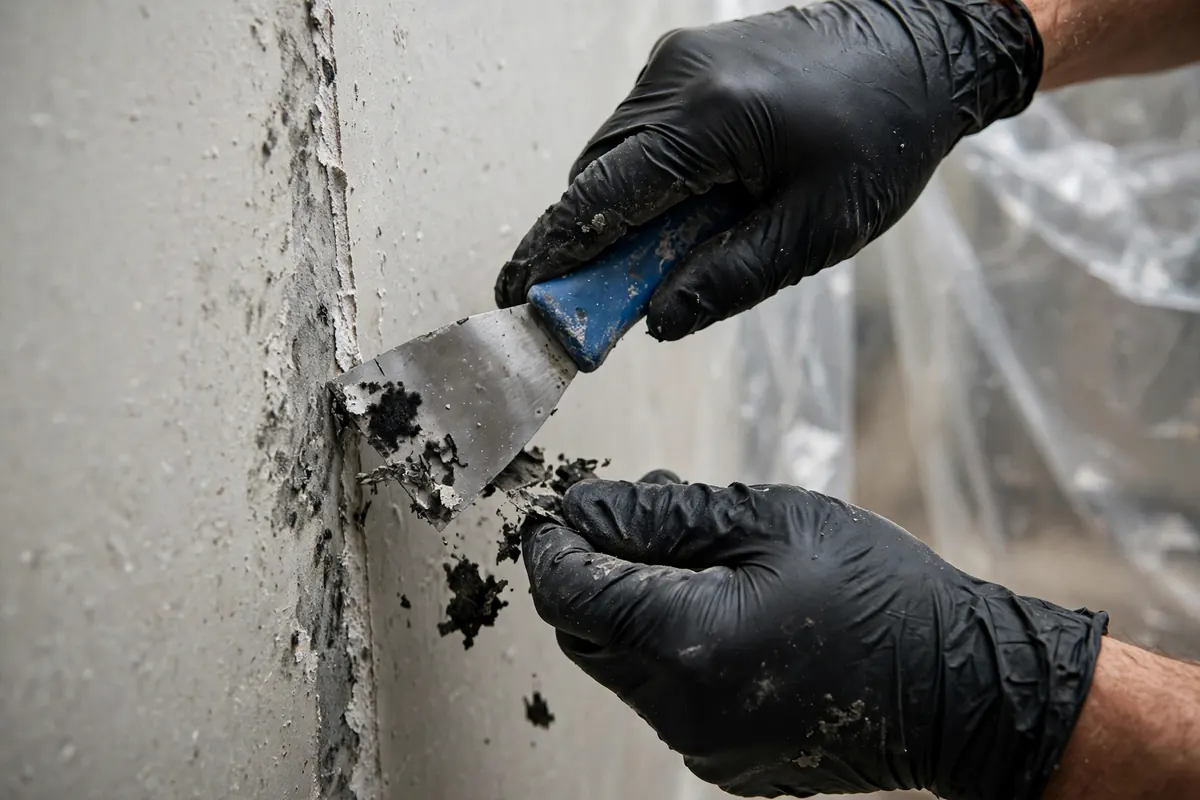
Our Black Mold Removal service is essential for addressing toxic mold types that pose health risks. We ensure thorough remediation to protect your home.
View service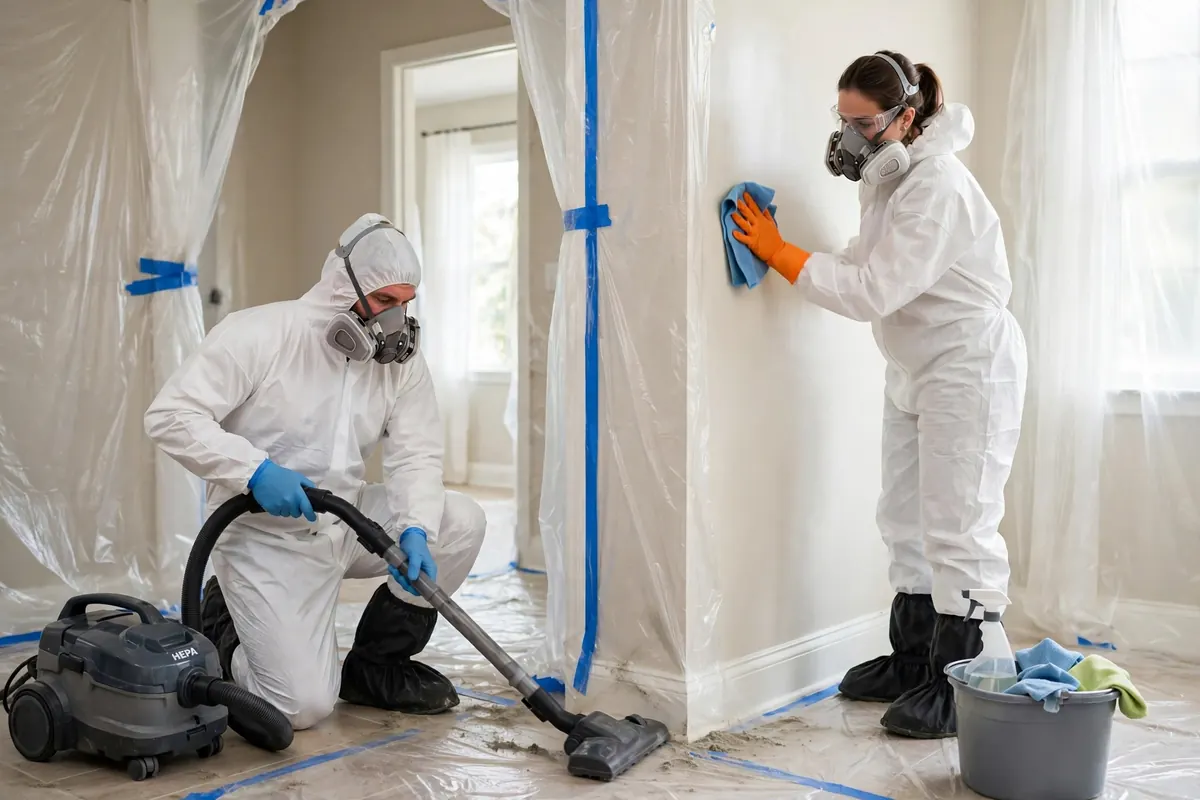
Before any mold removal, our Mold Inspection & Testing service identifies the type and extent of mold, guiding effective remediation strategies.
View service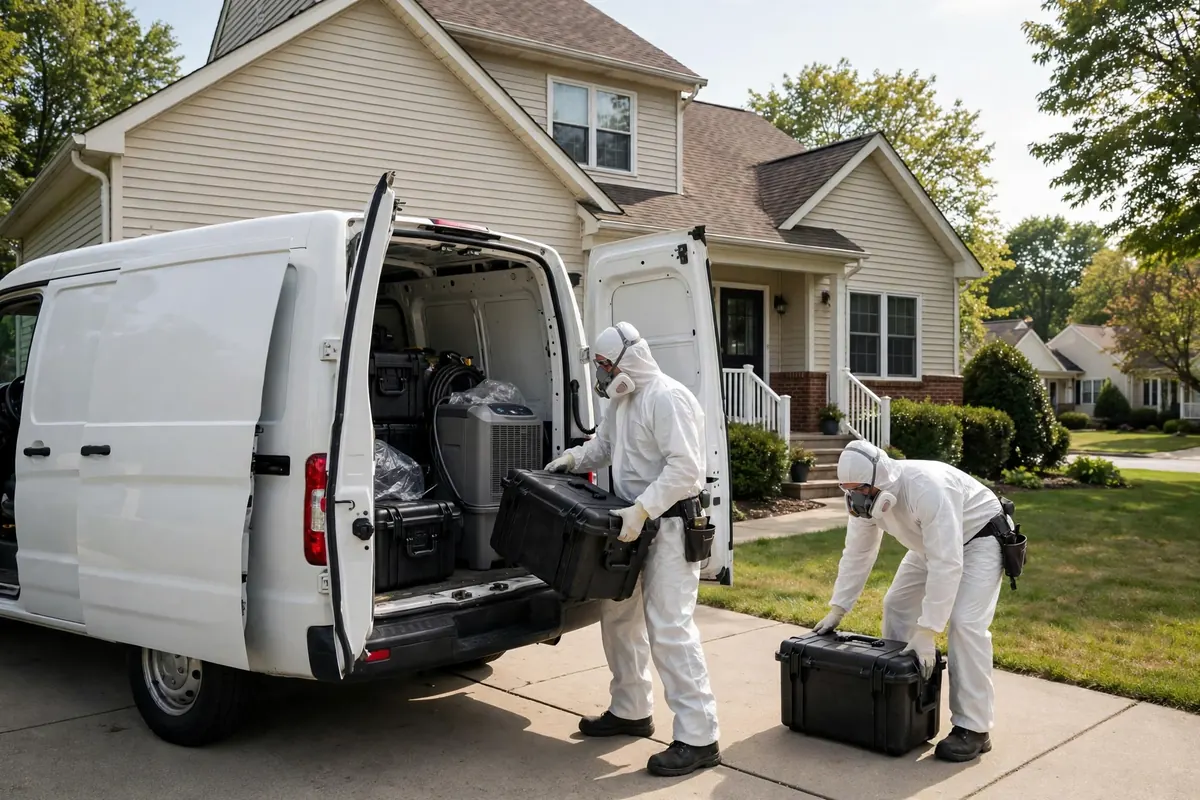
Air Quality Testing is important for assessing the impact of mold on your indoor environment. We provide detailed reports and recommendations for improvement.
View service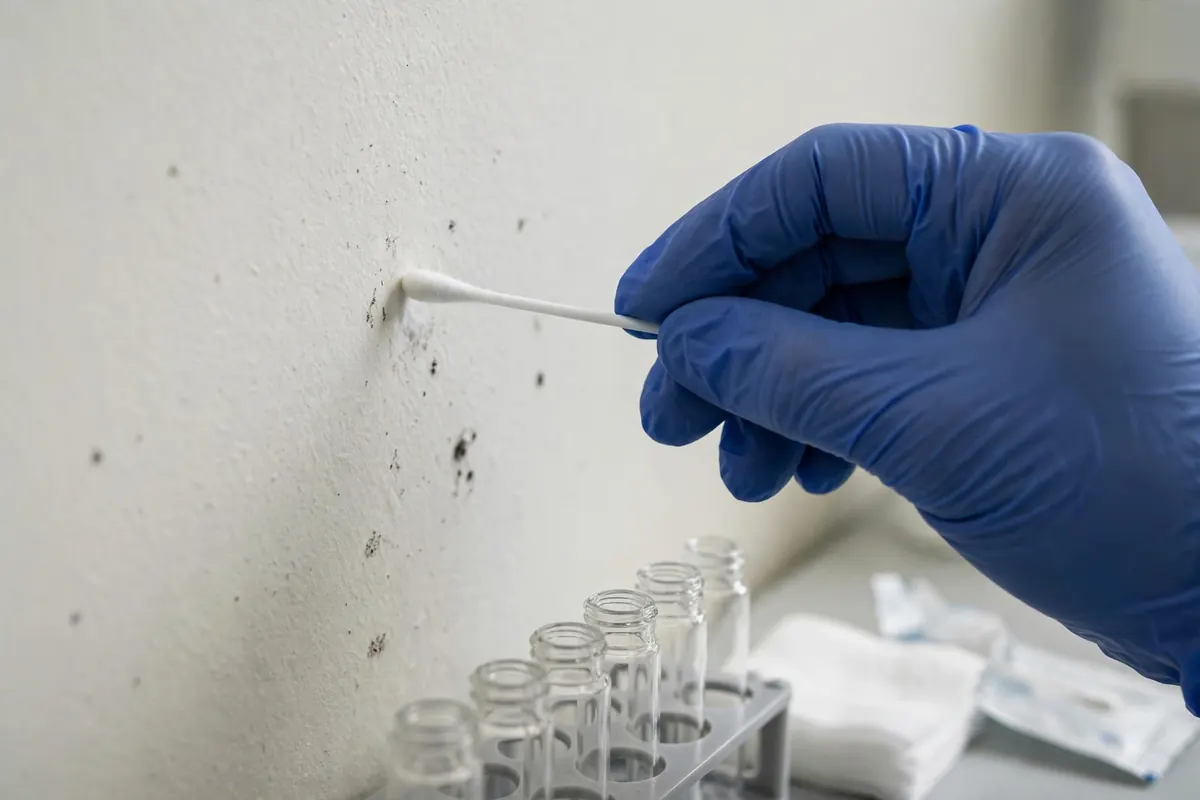
After remediation, our Mold Clearance Testing ensures that your property is mold-free, providing peace of mind for homeowners and businesses.
View serviceWe bring this service to homes and businesses across Newark and the surrounding communities.
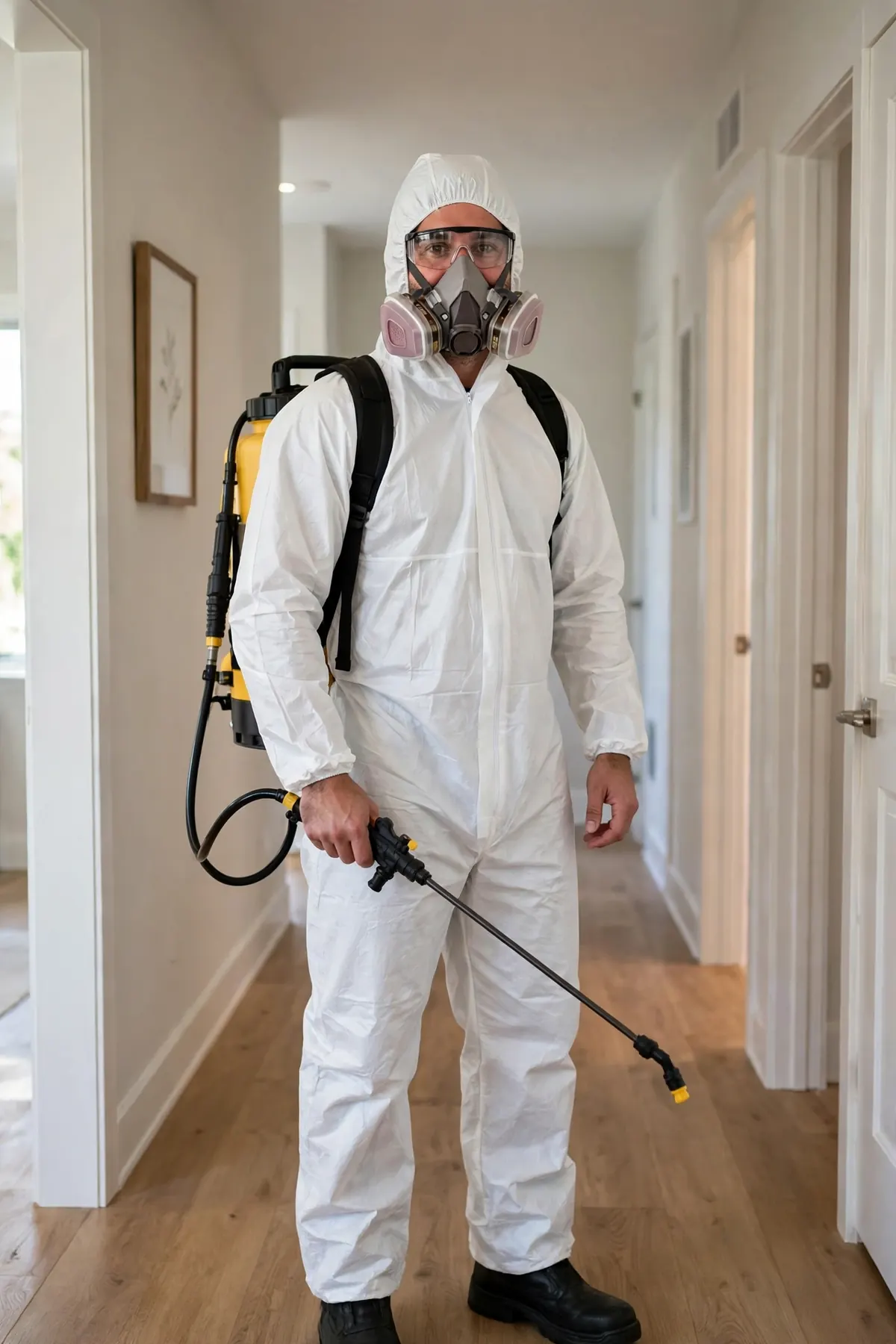
Dealing with moldy framing, attic decking, or joists? Reach out — we'll assess whether dry ice blasting is the fastest, cleanest fix.
Small spots turn into big jobs fast in New Jersey humidity. Call now and we'll schedule your inspection.
Call (973) 400-5618